Friday, January 31, 2020

THE GREAT DIVIDE

By Bill Slavin


Across Tomales Bay from the town of Pt. Reyes Station lies a peninsula which is the outer most edge of California. Beyond the land is the Pacific Ocean. At this time of year, hundreds of Elephant Seals sprawl across its beaches. The males fight each other for dominance, the females give birth and suckle their young. Park docents, eager to share their knowledge, supervise you so that you don't get too close to the enormous seals.


by Bill Slavin


Completely different plant life grows on the peninsula side of Tomales Bay from the other side. The origins of the 1906 San Francisco earthquake lie between the pushing and shoving of the Pacific and North American tectonic plates located in the middle of Tomales Bay. The peninsula, formed of the same rock as the Tehachapi Mountains in Southern California, has been inching itself towards Alaska at a slow but steady pace.


by Bill Slavin


Standing at the edge of Tomales Bay reminds me again of how small we are and how fleeting our time on Earth will be.


Painting by Sam Francis, courtesy of artnet.com

On the Pt. Reyes Station side of the bay sits Mesa Refuge, former home of the artist Sam Francis, which has been transformed into a writer's residence-retreat. Opening the closet door of the upstairs bedroom reveals the signatures of some of the writers who have used the space to practice writing, to begin books, and to move away from the hustle of human life to reflect on our world. Daniel Ellsberg, Rebecca Solnit, and Michael Pollan are just a few of the writers who have opened the refuge's doors.


Every year my writers' group led by Elizabeth Fishel comes to the refuge fo a weekend respite to sit with other writers for encouragement, companionship and time. The home itself has been transformed from the white-walled residence of Sam Francis to a vibrantly colored place, a reflection of the colors that Francis used in his work. At the entrance to the refuge hangs a large sign that says "Imagine" above the walk to the door. The main meeting room has expansive windows looking out on the marshes at the edge of the bay. Turning yourself around to look at the book-lined wall of the room, you see window cutouts near the roof that allow you to view a framed scene: a bird building a nest on a branch of an old tree or reflections of the inside overlaying the trees outside.


We met with Carlos Porrata, an engaging photographer. Many years ago, he and his family drove across the country and stayed at national parks along the way. By the time they arrived in California, he had decided to change his career from therapist to park ranger. Since his retirement from Pt. Reyes National Seashore, he has devoted his time to wildlife photography in a place that has been home to him for over 40 years.

Porrata exemplifies the spirit that generates from a visit to Mesa Refuge. His photos bring you close to the world outside. The books written while at the refuge reflect the creativity, solace, and reflection garnered from a site at the edge of the continent.


Here is a list of some of the books from the Refuge that I want to read:

Our Common Wealth by Jonathan Rowe
Meant to Be Wild by Jan de Blieu
More: Population, Nature and What Women Want by Robert Engleman
Pro-Voice: How to Keep Listening When the World Wants to Fight by Aspen Baker
On Good Land by Michael Abelman
A New Map of Wonders by Caspar Henderson
The Nature Fix by Florence Williams

These are just a few of the books. A more extensive list can be found at the Mesa Refuge website:
https://mesarefuge.org

Check out the work of Sam Francis:
http://www.artnet.com/artists/sam-francis/

Information about Pt. Reyes National Seashore can be found here:
https://www.nps.gov/pore/index.htm

Elizabeth Fishel, author and writer's group leader:
https://www.elizabethfishel.com
                           
Check out the photography of Carlos Porrata:
https://www.carlosporrata.com


Friday, January 24, 2020

CHILD'S PLAY


Supplies for a fun day of play

January. Have you been scurrying around like me since the holidays? I'm trying to find normal, but I've put too much on my calendar anticipating the lull after December. The lull never arrived. Instead, I'm shaking my head at my lack of attention to doing One Thing At A Time.

I'm taking a day off from my calendar today to give myself time to play. Since Valentine's Day comes soon, I thought I would make some easy Valentine's. I've collected these supplies:

heart-shaped paper doilies, card stock, and blank postcards
washi tape, scraps of paper, ribbon
waterproof fine line marking pens, stamps
watercolors and colored pencils
Altoid box
Glue

The easiest Valentine to make:


This Valentine is still hanging over Bill's office door


In a packet of paper doilies, some of the doilies stick together. Don't separate them. You want a cardstock-weight doily for each heart.

Fold the larger heart. Crease only two inches from the top. Cut along the crease. It is better to make a short cut. You can always cut a longer one.
Fold the smaller heart and crease from the bottom. Cut along the crease.


Slide the smaller doily down the cut on the larger doily.
Attach a ribbon through the holes of the larger heart.

Voila! You have a Valentine's card.


Postcards with Love

I had a lot of washi paper left over from other projects. This card is a great way to use up scraps. Paper doesn't need to be washi but chose papers with similar patterns or colors.


Cut the papers to fit the outside edges of the card stock or postcards you are using.
Before you glue, test your layers so that you get a mix that you like.
Glue the first sheet down.
The next sheet needs to be about 1/4 inch smaller. Glue that down. And don't obsess over measurements.
Continue adding layers until you are happy with the card.
Cut out a center heart from one of the doilies (just one layer of doily this time).
Use your marking pen to write your favorite love word.
As you write, extend the spaces between each letter. (Practice this type of writing before you do your final version.)


An even easier version: You could also use washi tape cut to fit the card and then attach doily hearts on top.


Love Book


You will need a sheet of Bristol paper or watercolor paper cut to 10 inches by 2 inches.
Starting at the right side of the paper, use your fine line-marking pen and doodle across the page. Starting at the right instead of the left will loosen you up. Try to make loops that are heart-shaped (or add hearts later). Color inside the loops with colored pencil or watercolor.


On the other side of the paper, write all the words that you can think of that mean love to you. Use the extended spacing between letters of each word to stretch out your words across the page.


Fold the paper in half and make accordion folds. Tie your little book with string.


Cover the outside of the Altoid box with paper or washi tape. Cover the inside lid and inside bottom with paper. Place your Love Book and some heart-shaped candies in the box.


Altoid box covered in washi paper

Love Book sits inside Altoid tin box

Have fun. A good way to play!

Good art supplies:
https://etchrlab.com has a package of 100 premium paper postcards
https://www.ooly.com/pages/meet-ooly  has gel pens, metallic colored pencils and other supplies that are just right for Valentine's Day


Friday, January 17, 2020

TODAY OF ALL DAYS


The door sticks as I pull it open. An invisible cloud of warm air pushes against me as I enter. I look around to see who is in the room and smile at so many familiar faces. I wander how it can be more than a month since I last sat at the table, picked up my brushes and started a new watercolor. I took a deep breath as I sat down and listened for a moment to the critical voice in my head telling me, "You'll have to start over. It's been too long." I shut the voice out as I turned to my neighbors, people who have become friends by sitting together, working together, struggling over paint placement and the desire to be better than we are.


Not yet finished painting of old shed


It was good to be back even though I left half-finished home projects scattered over the house. With my return to classes, volunteering and travel that I had set aside for the holidays, my attempts at New Year clean-up stalled in mid-January. I keep thinking that I will make a day to catch up, but already the tumult caused by an already-full calendar has jumped into my path.


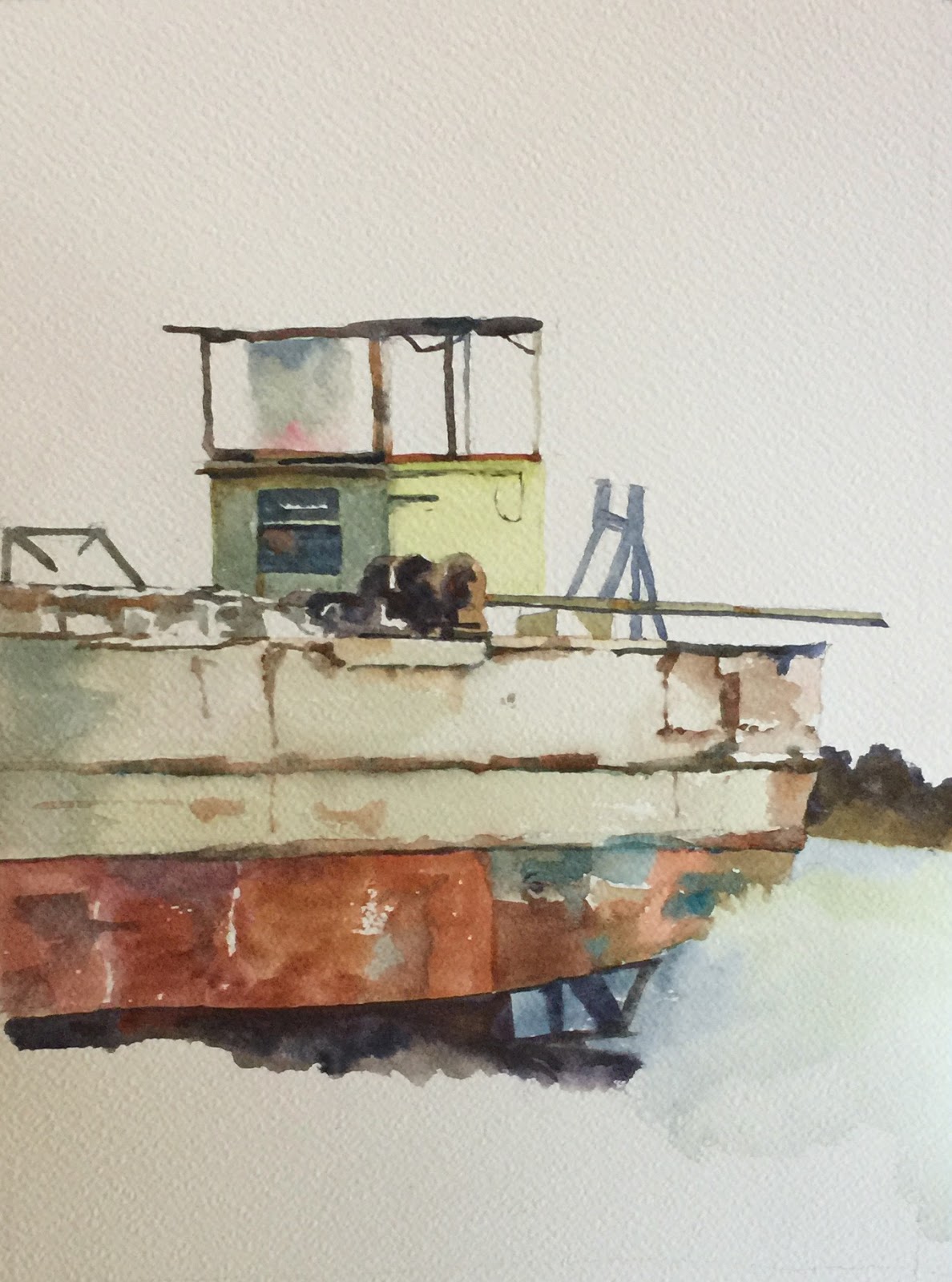
First day's work on old boat


The watercolor I am working on gives me hope. I found that my absence from art had been helpful. The skills I struggled with all last year percolated up and appeared on the page. My old mantra, One Thing At A Time, resurfaced as I placed a color on the page, stepped back to make sure that was the color I wanted, and then pushed the color forward another inch before I refreshed the color by dropping a new color to add depth to the first. For once, as I packed up my supplies at the end of class, I felt positive about what I had started. I walked around the classroom and saw the same renewed response in the work of others. We had all progressed in a year and now came ready for a new beginning.


Second day's work on old boat.
Now I need to add the sky and a few finishing marks.


January is full of promise, fresh starts, returns to old practices, and a recognition that another year has come and will quickly pass.  Have you stopped saying, Happy New Year, yet?

Today, January 17 is an ordinary day. No special holidays fill the calendar square, though January 17 has been declared Cable Car Day, Hot Buttered Rum Day, Ditch New Years Resolutions Day (that quickly?), and Judgment Day, which seems a little hard-nosed for an ordinary day. Ruth and Thomas Roy, creators of the day, tell us to look in the mirror on January 17 and see if you measure up to your own standards. If not, they suggest you go out and give life another shot, which is what I did recently when I opened the door to my watercolor class.


https://www.checkiday.com/e9417128100821a58a471a24c72fd8e0/judgment-day

Friday, January 10, 2020

WINTER COLORS

Brown: the color of old things.


The color of rust.


And of dryness.


Along with grey, the color of winter. 
Not the favorite color of most people. 
But how many browns can you find here?


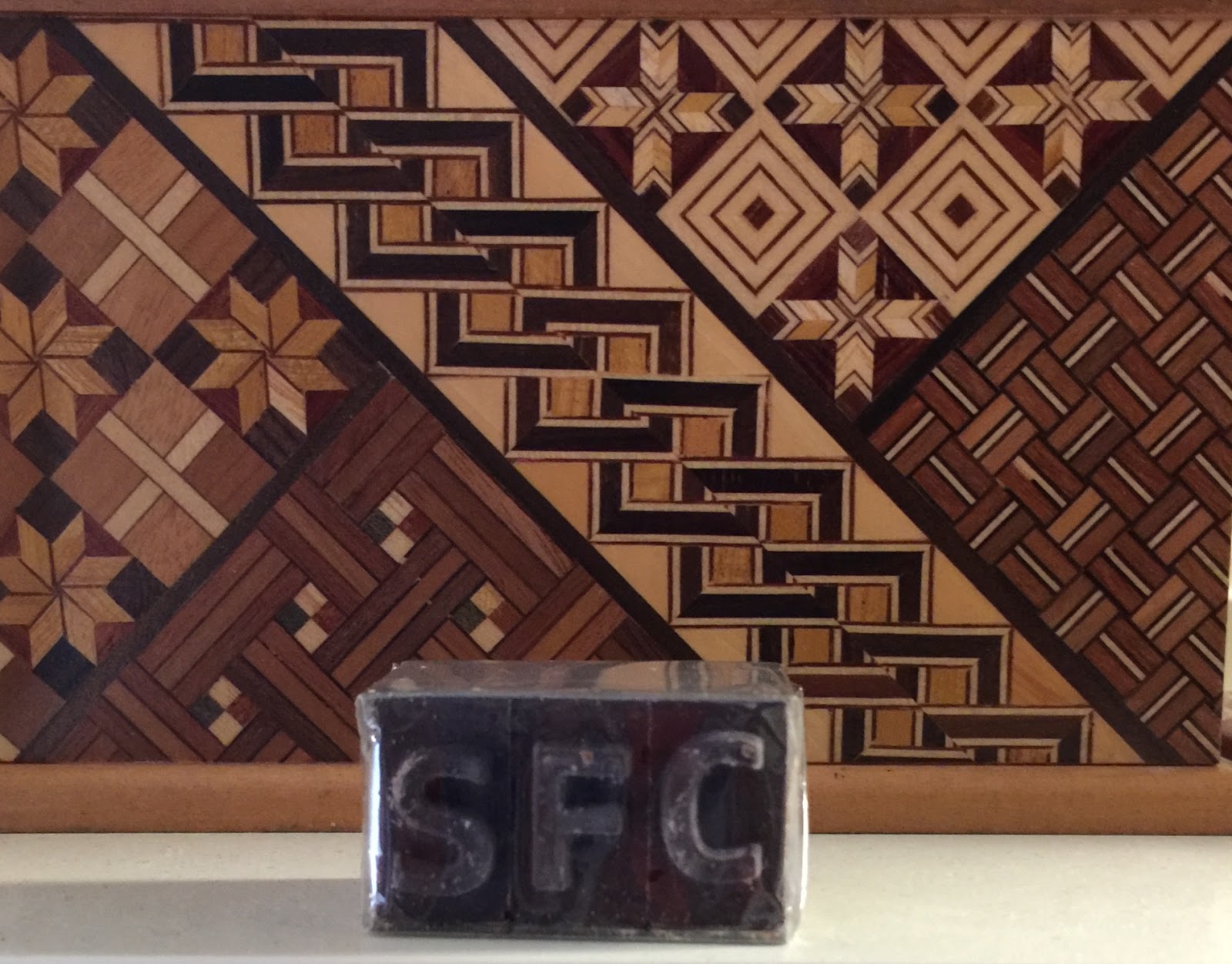
Brown is also the color of chocolate. And this beautiful parquet work behind the chocolate.


Brown is the color of spots on puppies.


And just baked bread.


Can you see warm browns and cool browns on these leaves? 
Brown is the combination of the three primary colors, blue, red and yellow. 
In watercolor it is easy to make Mud instead of a rich brown.


At the bottom right hand corner of this page of palettes, I show four browns right out of the tube: Burnt Sienna, Raw Umber, Raw Sienna, and Dark Brown. They all look pretty flat.

The other squares show variations that can be made using blues, reds and yellows together. I used Indigo Blue, Cobalt, Cerulean and Ultramarine Blue as the bottom layer. Then added Carmine, Alizaron Crimson, or Cadmium Red Light over that. I added Cadmium Yellow Pale, Cadmium Yellow Light or Winsor Yellow Deep as the last layer. Some of the squares may not look like brown, but these variations dropped around other browns or in the shadows could add depth to the brown on a piece of wood or bread or old ladder.


As a kid, I used to pester my mom with questions: What color is my hair? What color are my eyes? What is the best color for me to wear? Her usual response while she was doing laundry, washing dishes, or baking: brown, that is your best color. Not my favorite color then. But I've gotten over that. After all, there are so many versions of brown to choose from, aren't there?


Friday, January 3, 2020

ONE GOOD THING


New doors to open, new paths to follow, new traditions to find. 2020. As my eye doctor said, there will be many jokes this year about 20/20. 2020 will also be a good year for reflection and choosing to do one good thing.

When we lived in Tokyo, I adopted the tradition of new year clean-up. The truth though: I am still cleaning up from last year. The value of cleaning up still sticks with me even though the spaces I clear get cluttered almost as fast as I tidy them up. 

Just as this serene image of the boulder and calm waters lets my mind wander through the stillness, I know that after I take the decorations down, I clear my desk of leftover projects, and I sort through closets the emptiness remaining will open new space to think and create.


So today I'm trying to pack away, throw away, give away anything I can. I resisted for today the urge to start on a new project. I write down the idea so that I can come back to it later, and remember to take one step at a time. I think about the phrases I have adopted as a yearly theme: Joy, Home, Layers, Time, Just Say Yes, and Letting Go. I begin to feel the wiggle of a phrase that has poked at me in the last couple of days. "Don't make anyone else's life more difficult." Something to remember as I choose and consider my own actions throughout the year. Something I wish the leaders of our country will consider too.


Friday, December 27, 2019

STRANGE FRUIT


The oval path that surrounds Osage Station Park offers me a place to exercise and watch the changes that occur in the park as I walk four times around. Last week I came at the right time of the year to find Osage oranges littering the walkway under three trees. I used to walk this path every day but I never knew what these strange, lime green, warty objects on the path were. On this walk I used my new app, Picture This, to identify this peculiar fruit as Osage oranges that fall from three trees in the park and splatter themselves on the pathway.


I began the walk at the children's playground, which is nestled next to a memorial rose garden. Each rose bush has a bronze plaque commemorating a loved one who died. I always thought that the juxtaposition of the playground and the memorial was unusual in American culture.

Back then the children in the park used both the playground and the rose garden as part of their adventures. Now there is a sign posted in the rose bed, "Do Not Play in This Area at Any Time." I was sad to see the sign that fenced off imagination and connection to generations gone by.


I walked under the alders and black oak, which had lost their leaves in the fall, and by the middle school, which spewed out kids who ran around the path for exercise. Previously at this time of year, I would sometimes see a group pick up the fruit and throw them around. They would explode into fragments exposing the pithy interior and the seeds at the core. The oranges are not edible, some think they are poisonous, and the juice can irritate the skin. Squirrels and birds love the seeds. Cows and horses that try to swallow them whole can choke on them. The tree itself makes fine wood and hedges. The Osage, from which the tree is named, used the wood to make bows and arrows.


The Osage orange trees in the park came a long way from where they usually are grown. They can be found in the Midwest and parts of the South. R.O. Baldwin established a ranch on the site at the end of the 19th century, built a flag stop station for the Southern Pacific Railroad extension through the San Ramon Valley, and then planted Osage orange trees. Osage Station Park was named after the ranch where the oranges grew.

The Tatcan tribe were the original occupants of the land, not the Osage. The Osage, who called themselves the Ni-u-kon-ska, lived originally on the East Coast but migrated inland to the Kansas area. After the Civil War, they were forced on to a reservation in Oklahoma.

The Osage have an unusual history for an indigenous tribe moved to a reservation. At the turn of the 20th century, they became the richest per capita people in the world due to the discovery of oil under their land. They had been ceded the mineral rights to the land and prospered. But during the period between 1910 and 1930, people of the tribe either disappeared or were murdered. Many also lost their rights to the annual oil income due to chicanery. The Bureau of Investigation finally came to find the killers. The Osage murder story can be read in David Gann's true crime novel, The Killers of the Flower Moon: the Osage Murders and the Birth of the FBI. A good read.

A long walk around Osage Park keeps me in shape, allows me moments of exploration and reflection, and sometimes helps me arrive at a topic for my blog.


Try Picture This to identify plants:  (not a free app)
https://apps.apple.com/us/app/picturethis-plant-identifier/id1252497129

To learn more about the Osage tribe:
https://www.britannica.com/topic/Osage

To learn more about the Osage murders:
https://www.pbs.org/newshour/arts/the-forgotten-murders-of-the-osage-people-for-the-oil-beneath-their-land

To read David Gann's true crime novel, Killers of the Flower Moon: the Osage Murders and the Birth of the FBI, go to
https://www.powells.com/book/-9780307742483

Friday, December 20, 2019

A CUP OF SOUP, A STACK OF BOOKS & HOPE


Have you read enough articles about setting your priorities for the busy holiday season? All those recommendations and ideas go out my windows the closer I get to the big day. I'm scrambling to get packages sent (I found a secret post office where there are no lines), to decorate the house (I've cut back a lot from previous years), to stuff cards into envelopes with my husband (a good time to talk of good friends), and to try to avoid holiday traffic (go early or late). Laundry? Cleaning the house? Dishes in the sink? Not on my need-to-do-this-minute list right now.


Long ago I set my priority: enjoy the holiday, with an emphasis on JOY. All the scurrying around is part of the fun. But sometimes, like we all do, I need to take a deep breath and remember why I like this time of year. I think of small things: the birds at the feeder right after the rain, the other customer who bagged my groceries without asking, the lights on houses in the neighborhood and downtown, the friendliness of strangers, the toddler reaching for the falling leaves as they drifted down from the sky, and someone walking by in regular clothes but with a Santa hat on his head. Small things can bring a smile to my face.

At home, I can stop, make a bowl of soup, add some good bread, and read an engrossing book by the fire. I've recently been reading biographies and memoirs set in different locations: an Irish farm, the area in the West defended by the Oglala Sioux leader, Red Cloud, and Czechoslavakia from its founding to the present day. And some good fiction too.


Here is one of my favorite wintertime soups. 
Take a moment and warm yourself with a bowl of soup and a good book.

Creamy Chicken and Wild Rice Soup (adapted from Delish)

You will need a total of 4 cups of chicken broth
a large handful of mushrooms
1 cup of wild rice
3 Tbsp butter
1 onion, chopped
2 large carrots, sliced into rounds
2 stalks celery, thinly sliced
1 lb boneless, skinless chicken or turkey breasts (or purchase already roasted breasts)
3 cloves garlic, minced
1 Tbsp thyme
1 tsp sage
Salt and pepper
3 Tbsp all-purpose flour
1 cup of heavy cream

First Step:
Bring 1 cup of chicken broth to a boil and add a large handful of mushrooms. Remove from the heat and let stand for 30 minutes. Chop the mushrooms.

Second Step:
Bring 2 cups of chicken broth to a boil and add 1 cup of wild rice. Cover, and simmer for about 20 minutes.

Third Step:
In a large pot, melt butter. Add onion, celery, and carrots. Cook, stirring, until vegetables are tender, and liquid has evaporated, about 6 minutes. Add chicken or turkey and cook until golden, 10 minutes. (Skip this if you purchased roasted breasts. Pull the meat from the bone and place in the pot with the other ingredients.) Add thyme, sage, & garlic. Stir till fragrant, 1 minute. Season with salt and pepper.

Add flour and whisk until golden. Pour in the last cup of broth and the cream. Add salt and pepper to taste. Add wild rice and simmer for 20 minutes.


Good eating and good reading. Happy Holidays to All!