Friday, March 3, 2023

A ROOM FULL OF MAGIC


Cup designed by Janet Takahashi

Walking by the classrooms at the Cal Poly Pomona Kellogg West Conference Center reminded me of my own teaching days but with a difference. Here I saw adults working quietly on calligraphy projects. When I taught middle school, my students boisterously moved around the room filling cups too full of paint, carelessly bumping into each other, or huddling around me as close as possible as we went over the methods we needed to practice for a project. Unlike the scribes at this recent conference who worked with focus and purpose, my students were not quietly working, but often bouncing around as only middle school students could.

For the first time since the pandemic, the Society for Calligraphy, based in the Los Angeles area, held its Letters: California Style conference. Each class of scribers was full of eager learners and the results displayed by the students on the third day made me awe-struck.

I arrived early at the center on Friday morning, checked in, picked up materials for the class I was taking, and wandered through the aisle of the pop-up Paper and Ink Arts store with a home base in Tennessee. As I walked by their tables, I once again proved there is always something to buy at an art store. I found some washi tape that had been cut into two-inch lengths and Japanese light-weight masking tape to attach drawings I had made to my new journal.


Page for the letter "P" made in Janet Takahashi's workshop


I came for Janet Takahashi's Letters of Whimsey and the Art of Finding Creativity workshop, a subject that I respond to with enthusiasm. During the class, we filled an unlined journal with letters from A to Z and then added words and ideas that emerged in response to the question, "What creative words begin with...?" Some words came quickly to mind: Brushes for B, Lines for L, but what about Z? Janet offered Zen moments, a good reminder, as she said, to Pause, Breathe, and Let Go. While we all worked hard,  those words were important and gave us a chance to play and have fun. That's really where creativity begins.


Pages drawn for letters "G" and "K"
during Janet Takahashi's class at Letters conference.


In three days, Janet gave us an explosion of art techniques and theories that previously took me many years to learn when I was in school. What she showed us was a good reminder and review of the work that goes into being an artist. We explored perspective and drawing techniques, dimension, shape and form, gradation, layering, and texture. We also got some good ideas to remind us how to be an artist.

Janet started the class with this thought, 

"Mistakes are lessons, not mistakes."

She also said, "Just get it out of your system. Edit it later."

Good advice for all of us.

Janet not only teaches but is in the process of creating an illustrated book based on this art journaling workshop. She plans to produce diagrams and illustrations about a multitude of topics. Look for it in the coming year on her website here:

https://janettakahashi.com

Check out the Society for Calligraphy. The website shows photos of work done at the recent Letters conference:

https://societyforcalligraphy.org

Paper and Ink Arts online store:

https://www.paperinkarts.com


March is full of celebrations: in just the first week, we can celebrate National Minnesota Day on March 1, World Book Day on March 2, National Anthem Day on March 3, and National Grammar Day on March Fourth. Oh, and my sister Linda's birthday is on March 2, which, since she is a voracious reader and grammar nerd, is an appropriate day for her.

Check out the other national days here:    https://nationaldaycalendar.com


Friday, February 24, 2023

A CHANCE TO RECONNECT


Photo by Bill Slavin

Right in the middle of a chilly, blue-sky Spring day, I heard the news that a high school friend had passed away. She had had Parkinson's disease for many years, but I was still surprised by her passing. Her death made me think of other people I knew who had come and gone from my life, who died too early, and how random death can be.

She and several friends and I reconnected after our last high school reunion and tried to stay in touch with lunches at our homes and trips to museums. We all raised children, some of us lived overseas for periods of time, some taught school, some traveled extensively, some volunteered in their communities, and some of us became politically active during election seasons. We had different political points of view and activities that might have caused conflict in the group, but we didn't bring up issues that would divide us. Our visits to museums and our memories of our younger school days became the glue that held us together.

We grew up in a suburb of Los Angeles, nestled against Mt. Wilson, known for its racetrack and conservative point of view. For a year in high school in the 60s, we attended classes in Quonset huts because the community turned down an increase in school taxes. The heat and darkness of those tents stayed with me as a reminder of the tenuous support for education found in communities where you would least expect it.

We all left town to broaden our understanding of the world, but we took a piece of the town with us. After high school, our other classmates went to college, trade school, started jobs, or entered the military. We lost friends to the Vietnam War and to breast cancer. Some never came back to reunions, and others were the driving force behind the events. The six of us kept reconnecting at reunions but lost touch when we returned to our busy lives. We decided we needed to do more. We found a common interest in museum exhibits and traveled to MOMA, the deYoung, and Legion of Honor in San Francisco, and to the UC Davis Design Museum. 

Of the six of us, there are four left. Thinking of the two who have passed away, I'm reminded of the remembrance board at reunions. The list of people who have died gets longer and longer each time we meet. As the years accumulate, we have fewer opportunities to reconnect with someone else whose life is full of experiences that we could share and who knew us when our own views and experiences were just developing. 


Thursday, February 16, 2023

COUNTRIES IN COLOR


 Looking back at photos from a trip to Italy, I fell in love with Tuscany colors again. Raw Sienna, Burnt Sienna, Raw Umbre, Burnt Unbre, and Yellow Ochre, are the subtle colors that make up the earth around Tuscan towns. The clay from that earth forms the bricks of the buildings, the ingredients in the paint are used to create murals, and these colors radiate a soft light throughout the region.


While in Asissi, we walked into an old building under reconstruction and I took photos of a small space where the workers had left their tools and supplies. Even these carried the Tuscan colors.


I think of other places that I have been and remember the colors of the places. I think of the rich greens, dark brown earth, white birch bark, and iron red soil of Minnesota. I'm reminded of the vibrant reds, blues, and greens topped with gold, that can be seen in Thailand. Growing up in the Los Angeles basin, we could wander into the desert of LA with its greys, soft light browns, and sage green, with touches of white and yellow.


In Japan, we noticed how beautiful the black, grey, and shades of white became when it rained. Small amounts of red punctuated the more somber colors. These colors often are used by artists, including me,  in Japanese-style brushwork.


In Norway, strong, dark colors with metallic shine made me aware of the strength of the land.


Sketch of the waterfall at Skulestad


 In Arizona, a desert different from Los Angeles, the colors are more vibrant, especially the sunsets, with deep, rich reds, pinks, and purples.


Not every place brings out memories of the colors of the place. But some do. Where have you been where the colors are a good memory of the place?


Friday, February 10, 2023

MIND AND SOUL


See the Light

Inside the covers of a book, I can find another soul who has let me see their thinking, their creativity, and their questions about life. While Bill and I de-clutter our house, we are going through our stacks of books to donate. Opening each one reminds us of the pleasure of reading its contents.

An artist's sketchbook, like a book, can be a good way to see into someone else's mind. Sketchbooks tend to be more fluid than a finished product. A sketchbook is full of starts and stops, trails and mess-ups, and scribbles that explain what the artist is trying to do. That's why in a museum, I search for artists' sketches and linger over them while I may whip through the rooms with their famous pieces.


An A to Z accordion book, one of my favorite themes to use

Using a sketchbook to put thoughts on paper is a fun way to express myself in art and writing. I've learned various versions of artists' books and know how to make accordion books, flag books, books with cutouts to see to the next page, books with pockets and envelopes, and a book from a single piece of paper.


An accordion book with single objects drawn on lines that run through the book


A Flag book page with leaves glued to each flag. Each flag is attached to an accordion fold. Pulling the string at the end will make the page open and close.


A circle cut out of the book cover to show what is on the next page


A star fortune book with pockets for fortunes or booklets


A simple book out of one piece of paper gives me a way to expand a Valentine's Day card. Making a book of love can take you back to childhood and the time spent making cards in school with scissors and paste. Click on the Project Directions page to see how to make a  one-piece paper book.


Inside a one-page booklet


Here are some other possibilities for Valentine's Day declarations:

Hanging Hearts


A mint tin full of love


Friday, February 3, 2023

YOUR VOICE ON PAPER


Beginnings of Spring, Valentine's Day just around the corner. 

Where did January go? I want to reach back and catch it and savor the chilly air, the blue skies, and the sleepy feeling of being inside because of the hard rain, but Time won't let me. It's February and the bulbs start to appear, Spring winds blow against the house and remind me of The Wizard of Oz, and it's time to send thoughts of love to friends and family.


I sit down to make some postcards for Valentine's Day. I bring out stickers, tapes, and search for examples of handwriting. I come across some letters from my mother and sisters. They were well-schooled in the Palmer Method of writing, that simple, elegant style that was taught in public schools from the early 20th century through the 1950s.


Practice page from the Palmer Method booklet

Along with other culture wars lately, handwriting and loss of cursive instruction is lamented by many. Though cursive is still taught in many classrooms, the amount of time for practicing the skill has made way for keyboard instruction, another useful but different skill in our digital age.

Is there value in writing (or printing) for our minds to develop? Research by Professor Audrey van der Meer at the Norwegian University of Science and Technology suggests that handwriting can benefit brain development because of the coordination of visual and motor skills. Writing something by hand activates memory and learning better than using a digital pen or keyboard. These hand-eye coordination skills are so rudimentary that we don't often stop to think of their importance in our own continuing development and creativity.

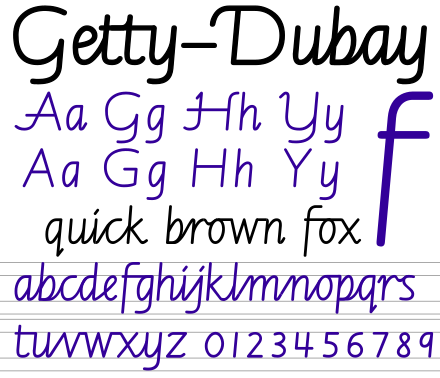
I keep a basket full of cards and letters I've received. I keep them for the sentiments expressed but also because of their handwriting examples. The basket reminds me of a story a lettering instructor told our class about walking in the financial district of London. He saw stacks and stacks of paper sitting on the curbs ready for the dustbin. He looked through them and discovered the stacks contained pages and pages of Spencerian notation made by bookkeepers and clerks (think of Bob Cratchit shivering over accounts at his desk in a Christmas Carol) during the 19th century. Someday we may look in wonder at the examples of our handwriting in the same manner as the teacher did of the Spencerian samples. Students in that era spent hours practicing Spencerian just as students toiled while learning the Palmer Method, which was supplanted by the Zaner-Bloser Method, and the D'Nealian Method in classrooms. Today, many schools use the Getty-Dubay Method, based on the Italic script font,  which easily moves from printing to cursive, and is far more legible.


Did you learn cursive with any of these methods? Did you learn to print instead? When was the last time you wrote or received a letter? How often do you jot a note to yourself with paper and pencil or pen? Even in adulthood, we need to continue these simple, hand-eye practices. How often do we lose something because we aren't paying attention to its importance?

*********

Read more about the importance of handwriting here:

https://neurosciencenews.com/hand-writing-smart-kids-17113/

Check out Getty-Dubay handwriting here:

https://handwritingsuccess.com

***********


Tyre D. Nichols might have had a successful photography career. Instead, his life was cut short. See examples of his work here:

https://thiscaliforniakid2.wixsite.com/tnicholsphotography/fashion 

Friday, January 27, 2023

POETRY IN THE SUN


 Resolutions just slip away, don't they?

On January first I decided to read a poem a day. I like reading poems because of their lyricism, the intense visual images they create, and their emotional intimacy. I realized long ago that I can't read an entire book of poetry all at once. Each poem needs to be savored. One a day. Easy resolution to keep, right?

That resolution lasted a couple of weeks during the surprising quiet time after the holiday rush that allows me to reflect, recharge, and resolve.

It's almost the end of January and I forgot all about reading a poem a day. I turned to some of my own poems to see what ideas they inspired and to remind me how difficult it is to write a poem. Poetry writers have told me that they rework a poem over and over to get the right word choices and the right sense they want to convey. 

I don't spend that kind of time writing poetry, but I like to write down phrases that come up and tuck them away to see if they will carry me further.

Here are two:

Spider webs cover a hill/ Dew covers each strand

Where will these two phrases take me? I like the idea of large and small: The spider webs covering a hill and dew covering the strands of each web. Is there more meaning to be found?

Frogs chirping as we walk by/  Their sudden silence the opposite of a motion-detector light.

I think I will leave that one alone.


While taking a letterpress class, I needed a short poem to express my ideas about cats. Trying to devise a poem and design a small book proved challenging in the amount of time I had. I also set myself up for difficulty by deciding to cut out silhouettes of cats within the book pages. Here is the draft of "Do You Know Cats?"


And each page of the completed book:


Do you know cats?
If you do, you know
the lightness of 
existence.

Do you know cats?
If you do, you know
curiosity, judgment,
and fear.


Do you know cats?
If you do, you know
a world of
concentration &
awareness.

What have I 
learned from cats?
I know to take
the time to be quiet.
I know to look
carefully.
I know to touch as
lightly as I can.

What I have learned from our numerous cats.

This post is in honor of Blackie, Chaucer, Bosworth, Winthrop, Kabuki, Jellica, and our last cat, Tangier Buzzer Baby, who passed away in January.

*********************

Two thoughtful posts about changing your attitude:

From Sarah of Frog Hollow Farm about community:

https://mailchi.mp/froghollow/newsletter-nov21-1556141?e=84fbcec38c

Pics and Posts by Chandra Lynn who shares a poem by Ullie-Kaye here:https://iamchandralynn.com/2023/01/25/wednesdaywisdom-some-days-and-sunflowers/


Friday, January 20, 2023

JUST TOO GOOD TO USE


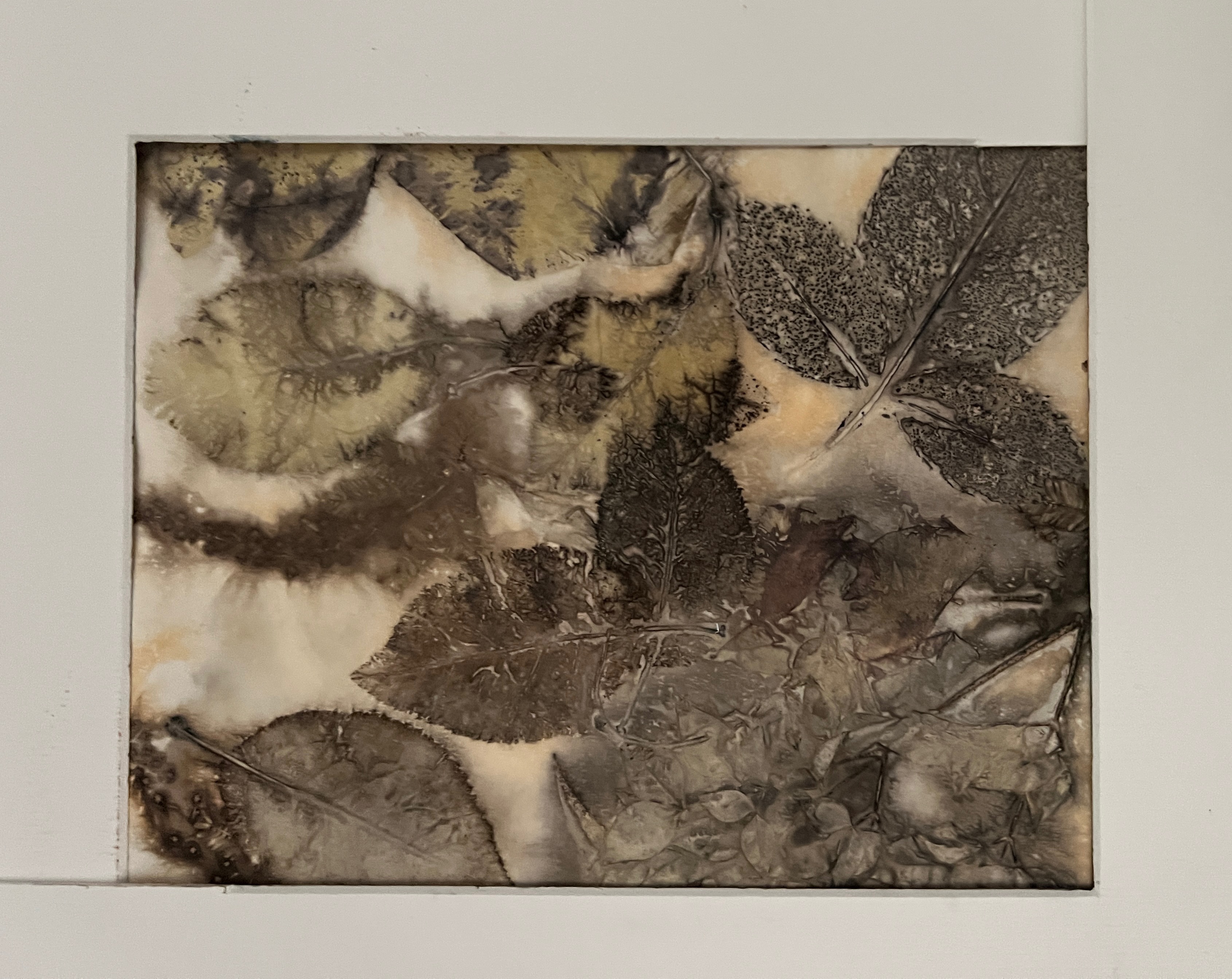
Examples of eco-printing on paper

Are you a saver like me? I don't mean just saving money. Do you have the impulse to save something that you like too much? Maybe a sweater or a pair of shoes?

Do you ever buy a piece of clothing, hang it in your closet, consider wearing it, only to hang it back up after you decide it's too good to wear for whatever occasion you are preparing for? I have a couple of such items in my closet. They may get worn eventually or my shape will change, so they no longer fit. But they sure looked good in my closet. I wonder about the logic of my thinking. Why did I buy it in the first place if I just wanted to save it?

This savings attitude affects my use of art supplies and projects too. Recently, I purchased two composition rulers designed by Nico Ng. They arrived in such a beautiful package that each time I went to open the envelopes containing the rulers, I set them aside. But what a treat to look at.


Lettering on the packaging for
composition rulers
by Nico Ng & Lindsay Bugbee 

The composition rulers are good lettering tools. You can make curved banners with lettering to fit the curves, which is not an easy process otherwise. I finally opened the envelopes to remove the rulers and I am now experimenting with different ways to design with the rulers.

I have friends who have stacks of fabric ready for use with the "perfect project." Anyone with a love of color, texture or patterns will likely find themselves squirreling away pieces of fabric for another day.

After taking a technique class in eco-printing, which creates naturally dyed papers using leaves and flowers, I ended up with a wonderful stack of papers that I can use for either book arts or mixed media pieces. The eco-printing process involves layering natural objects between sheets of paper, simmering them in a bath of water, vinegar, and rusty elements, and letting them dry. Both sides of the paper pick up the imprints of the natural objects with extraordinary and beautiful detail. 


Every time I think to use the paper, I ruffle through the stack and discover once again how beautiful they are. Which side to choose? Where do I cut the paper without losing the interesting textures and patterns created by the natural elements? 


 Finally, I dug out my two cardboard corners and laid them in various positions on one of the papers. This method helped me find designs that stood out and could be used for the endpapers of books, for book covers, or for framing as a print.


Possible designs found on one sheet of paper


Like magic, I could finally cut through the paper as long as I didn't look on the other side!


The other side

Learn how to do calligraphy or order the composition rulers:

https://thepostmansknock.com/blog/

https://www.domestika.org/en/courses/3985-intro-to-hand-lettering-for-inspirational-quotes?nbt=nb%3Aadwords%3Ag%3A17619194336%3A138662423896%3A607000805004&nb_adtype=&nb_kwd=&nb_ti=dsa-1678796949010&nb_mi=&nb_pc=&nb_pi=&nb_ppi=&nb_placement=&nb_li_ms=&nb_lp_ms=&nb_fii=66108775755&nb_ap=&nb_mt=&gclid=Cj0KCQiA8aOeBhCWARIsANRFrQE3zuLIybPOAn5dGQTwqN2ZLUubta9I7_ITHKDjJgfnx-_KAMbL0G0aAhg-EALw_wcB

Clear directions for eco-printing on paper:

https://carolannwebster.com/blog-2/eco-print-on-paper