Friday, December 14, 2018

GHOST PRINTS


A windy, wet day. Leaves and bark strewn across the slick sidewalk. 

I looked down to see darker images of leaves imprinted on the wet pavement. Rust-colored smears, like patches of blood, have leached from tree bark. The marks remind me of ghost prints in printmaking. I wondered if these natural impressions inspired the first printmakers.


When I make prints from an etching plate, I can run the plate through the press a second time to get a ghost print of the image. Sometimes the ghost image is more interesting, sometimes not. To experiment pushes me look at my pre-conceived ideas in different ways.


my original design to convey movement


the final print with a ghost print under the inked-plate print.
The image now dances across the page.


Gelli plate printing, an easier printing technique than etching, can also produce ghost prints with great details. The original gelatin or hectographic plates, developed in the 1860s, were made from sheets of gelatin placed in a sheet pan. The plates were used to print ads, small quantities of newspapers, and by teachers to make copies for students. Though no longer used commercially, the gelli plate has become a great artist's tool.

Gelli Arts is one company that make gel printing plates


 It's every person's printing plate and easy to use. All you have to do is spread a small amount of acrylic paint across the plate with a brayer, scratch some designs or lay stencils on top, and then press a sheet of paper down, and pull the paper when you are done. After the first sheet is pulled, you can lay another piece of paper on the plate and pull a ghost print. Once your printed sheets are dry, you can continue to layer designs and create unique pieces.


Original print on the left with the feather acting as a stencil.
After lifting off the feather from the plate, I made the ghost print on the right.
Look at the fine detail of the feather, almost like a photograph, that is picked up by the ghost print.


While the leaf impressions on the sidewalk disappear after the pavement dries, the prints I make are a permanent record of experimentation. Ghost prints give me the chance to create something beyond my original idea.

The original print is on the bottom. The ghost print is on top.


I made a series of prints using the feather and circles as design elements. I didn't really like any of them by themselves, but when I combined them together, they became a much more interesting design using repeat patterns and colors to express construction and destruction.


YouTube has some good examples of hectograph printing. Once you go to this site you will see many other options.

https://www.youtube.com/watch?v=lUGf19571vI

Check out the library at University of Iowa, good resource for hectography:
https://blog.lib.uiowa.edu/speccoll/2013/07/16/what-the-hectograph/

Friday, December 7, 2018

SAVOR THE MEMORIES


What is a holiday without special food?


I find myself on these short, overcast days thinking of cookies and remembering the days of baking with my family in the kitchen as we mixed flour, butter, sugar, vanilla extract and eggs together, making balls of dough or rolling the dough flat to cut out cookie cutter shapes. Cardamom, a spice from India and Indonesia, added a Scandinavian flavor to the cookies. How did cardamom wind up in many Scandinavian recipes? The Vikings sailed, traded, pillaged and participated in slave trading all the way to the Far East. They returned home with many items such as spices that influenced changes in their own culture. Cardamom was one of them.

My mom made Sandbakelse, a shortbread cookie with cardamom added, every year. When my mother stopped baking Sandbakelse, no one else in our family took over the all-day task of pressing a small ball of cookie dough into 3-inch fluted tin pans, baking them in the oven until the edges turned brown, and letting them cool before carefully tapping them into her hand. Though we always savored Sandbakelse plain, other people fill the flutes with lingonberry jam or almond fillings.


My sisters and I made pepperkaker (a ginger cookie), rosettes, and krumkaker (another cardamom-flavored cookie). I include my dad in the group of holiday treat makers, not because he made cookies, but because he supervised making lefse, a Norwegian potato pancake. He heated crepe-like circles of dough on a griddle and flipped the thin pancake when brown spots appeared. He knew just when the lefse was ready. Once off the griddle, we spread a few of the lefse with either butter and jam or butter and sugar. We rolled the lefse into tight rolls, closed our eyes, opened our mouths, and tasted the first holiday treat of the year.

I don't bake often, but the holiday season creates the desire to inhale the aromas of baking cookies, to savor the warm, butter-filled lefse, and to crunch into a powdered sugar-coated rosette, which then covers my lips and tips of my fingers with fine powder to be licked off with pleasure. What a holiday treat!


Sandbakelse before baking  Photo courtesy of Fisken Fjorden


Here are two Heimdahl cookie recipes to try:

Sandbakelse, as written by my mom

Pre-heat oven to 375 degrees. Warm the fluted tin pans.

Mix together:
1/2 cup butter
1/2  cup oleo
1 cup sugar
3 cups flour
1 egg
2 yolks
1 tsp baking powder
1/2 tsp cardamom
1/s almond extract

Roll into a 1-inch ball. Spread the dough inside the fluted pans, pushing the dough up the sides.
Bake for 6 1/2 minutes. Let cool before removing from pans.

Pepperkaker

Pre-heat oven to 375 degrees.

Mix together in the following order:
3/4 cup butter
1 1/2 cups sugar
1 Tbsp dark strap molasses
2 tsp baking soda
1 egg
3 1/4 cup flour
2 tsp cinnamon
1 tsp cloves
1/2 tsp ginger
2-3 Tbsp water, if needed

Chill dough and roll out thin. Cut in diamond shapes.
Bake for 10 minutes.


Do you have a favorite holiday treat?


Friday, November 30, 2018

GOOD WINTER READS

I'm right in the middle of reading Grand Alone by Kristine Hannah. It's the type of book I usually don't read before I go to sleep: full of tension, good characters, and riveting events. The type of book that keeps you reading way past bedtime and into the night. I'm halfway finished and wondering what will happen to the people who live in the northern part of Alaska and who need to keep vigilant constantly to survive harsh winters and predators. Not a good bedtime story.

I think of the books I usually read before I go to sleep. I purposely pick them because they aren't full of suspense, they don't grip my imagination so that I'm wide awake wondering what is going to happen next, and they allow me to begin to relax into sleep. They are all non-fiction and full of interesting information and often lyrical writing at its best. Here are my favorite bedtime readings:


The Wild Places by Robert McFarlane
     McFarlane wanders in the wildest places. He writes of a walk through the British Isles: "Rooks haggled in the air above the trees. The sky was a bright cold blue, fading to milk at its edges. From a quarter mile away, I could hear the noise of the wood in the wind: a marine roar...."

Wild Comfort: The Solace of Nature by Kathleen D. Moore
      Moore discovered the healing power of nature after the deaths of people close to her: "...All I had to do was look out the window. Young eagles struggled to land in the trees but missed their branches and tumbled down, catching themselves on frantic wings. The morning light was brown, like an old bruise...."

The Wild Muir, a selection essays by John Muir
    Essays written by one of America's great wanderers who put his adventures down on paper so that we could all experience the California wilderness through his writings.  

Prague Pictures by John Banville
    A must-read if you plan to go to Prague. Banville says of Prague: "...I am not sure that beauty is the right word to apply to this mysterious, jumbled, fantastical, absurd city...There is loveliness here, of course, but a loveliness that is excitedly tainted...."

Are We Smart Enough to Know How Smart Animals Are? by Frans de Waal
    As a scientist, de Waal wondered if humans were really superior to other animals as we claim to be. In his research, he followed and created studies that debunk every distinction we try to assert about being human, from using language to planning for the future, in order to separate ourselves from the other creatures on earth. The book is full of evidence to show how close we are to other beings and how much we share with them.

American Buffalo: In Search of a Lost Icon by Steven Rinella
    Rinella shares little-known information about the American buffalo as he roams through the rugged Alaskan wilderness hunting a buffalo. I have a hard time understanding hunting as a sport, but this is an intimate book about one man's trek through a primeval world.


Any one of these books would be good to pick up, wrap yourself in a blanket and spend some moments reading by a fire. Good winter or bedtime reads.

What are you reading right now?

Send me a list so that I can add to the Book Lists on this blog. You can either place your list in the Comments at the bottom of this post or email me at marthaslavin@gmail.com


Friday, November 23, 2018

YESTERDAY AND TODAY

by Bill Slavin


The difference between yesterday and today.

At last.
Rain splashes on the sidewalk.
Rain opens windows.
Rain-damp air brings
a deep breath
to clear smoke from a body stiff
from avoiding the murky, low-hanging sky.


by Bill Slavin


At least.
The rain is soft.
Not the gully-washer
that could bring mud slides
down on fire-scorched earth.

At least.
The rain sinks into the parched soil,
and reaches for starved roots.
Giving hope.


by Bill Slavin


At last.
The fires cease.
Full autumn arrives
with brilliant leaves drifting from trees,
curling in gutters and across lawns,
bringing chilly shade in the morning.

The difference between yesterday and today.


Friday, November 16, 2018

GRATITUDE: SMALL AND LARGE


What is your favorite holiday?

Thanksgiving is definitely mine. I've always loved autumn for its light and shadows, for leaves turning color and falling in swirls to the ground, and for the expectation of winter around the corner. But Thanksgiving adds one more note to the day:  Gratitude for the year behind us.

Even after a tumultuous time for our country and for the world as well, I can still list acts by people who put others ahead of themselves. I begin my list with a quirky event that confirms that small actions can make a difference.

Thank you 

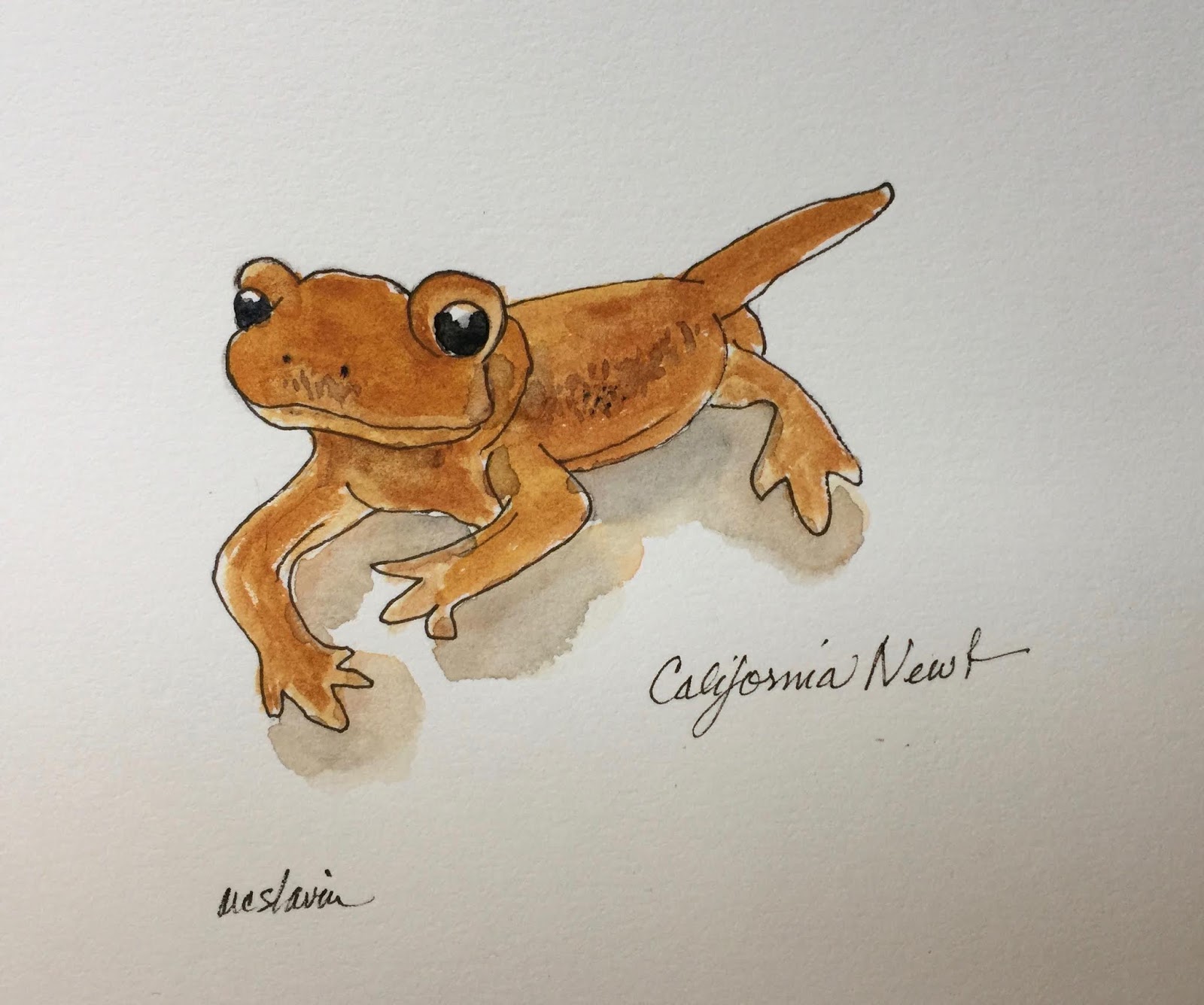
To the Tilden Park rangers who closed a road in the park during the annual newt migration.


California Newt by Martha Slavin


To the scientists who have discovered that life can develop even two miles below the surface of the earth. Worms the size of a human hair exist deep in the soil without sun, sustained by water and minerals in the earth.

To wildlife conservationists for their work to increase the number of  whooping cranes, whose numbers were as low as 14 and now number in the 700s. For their efforts to save bald eagles, bisons, wolves and other less glamorous species such as snakes, snails, and mussels, who are repopulating in areas where previously we have tried to wipe them out.


Crane by Martha Slavin


To the people who rescue animals during fire storms or hurricanes and then work to find their owners, sometimes long after the event.

To all the helpers, our first responders, fire fighters, police officers, and military personnel, no matter what the weather or terrifying conditions, who put themselves in danger to help others. 

We all owe you more than gratitude.

Feather by Martha Slavin


To read more about life below the earth's surface:
To read more about endangered species:

Friday, November 9, 2018

FIRST SIGN OF WINTER?

Mt. Fuji, Japan

Are you sitting inside watching the snowflakes come down? Is is 25 degrees outside? Or are you in California where it is still 75 and wondering whether winter will ever arrive?


Every year as winter approached in Southern California, my parents would take us to see the latest Warren Miller movie. Miller who died last January, was the first well-known director of ski movies. In his early days, he would narrate his movies from the stage at the San Gabriel Mission Playhouse. His camera would follow expert skiers, such as Olympian Stein Eriksen of Norway, down from the tops of the Alps with plumes of powder snow billowing behind them. He would stand at the bottom of beginner hills and make us laugh at the Laurel and Hardy-type antics of people learning to ski. In his movies, the sun was always shining, the skiers were always smiling. My family was enchanted. We all wanted to learn to ski.

My dad from Minnesota, had learned cross country skiing as a child. After watching Miller movies, he decided he wanted to give alpine skiing a try. He had visions of doing S-turns down mountain slopes just like his role model, Stein Eriksen.


My dad on cross country skis


My family ventured to the local ski shop to purchase the equipment we all needed. Back then, the skis were wooden and heavy. I stood at attention while the shop clerk asked me to raise my hand straight above my head. He placed one of the skis so the tip touched the tip of my extended fingers. The poles, lightweight at least, were made of bamboo with leather straps tying the baskets in place. The boots were lace-up leather and needed stuffing with socks to fit. I only learned how cold my toes could get when we trudged through the snow. All of our clothing was heavy wool: wool pants, wool caps, wool sweaters with Scandinavian designs woven in them, and woolen socks, all itchy and uncomfortable. We trundled out of the shop with our ungainly purchases.


Wooden skis and bamboo poles    Courtesy of Ski the World


On a blustery weekend, my dad parked on the road leading to Wrightwood ski resort in the San Gabriel Mountains. He handed me my equipment and I tried to pick up the skis and sling them over my shoulder while carrying my poles as I had seen in the Miller movies. I was almost 10 years old, just 5 feet tall, and weighed less than 80 pounds. The ground was slippery with ice. I couldn't cope with carrying all the equipment, let alone the snowflakes creeping down my neck and my toes turning to cold bricks. I hated skiing right then and there. The rest of the family, older and stronger, lasted the day and learned to be proficient on the snow, while I stood and complained until my mother dragged me inside the resort lodge. At least the hot chocolate tasted good.

After a few more outings to Wrightwood and Mammouth, my parents put away the skis. The cold, the expense, and driving in blizzards had curbed their enthusiasm, but they continued to watch Warren Miller movies. I didn't venture to the snow until my twenties and married Bill, who learned to ski in college and now skied like the Stein Eriksen of yester year making smooth S-curves down the ski slopes.

I still had the wool sweater with the Scandinavian designs, but I traded my old skis for some lightweight K2 skis that didn't even reach my head in length. I took lessons and found I could follow an instructor down difficult terrain. Bill and I became fanatics, skiing almost every weekend at Squaw Valley at Lake Tahoe. My toes still hurt, but finally I was able to master most of the slopes of that resort. Bill continued carving S-curves with other expert skiers.


We skied almost every weekend for 20 years, but then the drive back and forth to Tahoe became too long. It wasn't until we moved to Japan, that we skied again. Theo, our son, who was 9 at the time, attended a school in Tokyo that offered a week of ski lessons at Nagano. To get there, we traveled by train with just a small suitcase each, carried no ski equipment with us, and stepped off the train right at the resort with the sun brightly shining, a reminder of the old Miller movies. Though Squaw Valley and Nagano had been Olympic venues, most of the Nagano slopes provided a good run, but not the "nail-biting - stand in my tracks - I'm not going to move because I'm going to die" fun that I often experienced at Squaw.


The sun was still shining as we walked into the lodge to rent equipment that was brand new. By the time we got to the slopes though, the sun had disappeared, and a storm swept through the resort. Theo spent the week in lessons, with wind whipping his face and snow sneaking down his neck. He came away disliking skiing almost as much as I had when I first learned. It wasn't till we took a trip with friends to Fujiten ski resort on Mt Fuji that I saw him having fun. As we skied down the slope, he used the fallen snowboarders on the hill as slalom markers to make quick turns down the mountain side, just like the slalom skiers in the Warren Miller movies.


Bill and Theo at Fuji-ten Ski Resort


When I read that Warren Miller died in his 90s last January, I couldn't help reflect about what an influence he had had on my life. He was the first one to challenge my family to try an athletic endeavor. Watching the skiers in his movies made us all dream big and imagine ourselves in their places. Without his movies, I would not have been able to visualize how to carve an S-curve in the snow. Without his movies, I would not have persevered through blinding snowstorms to reach the top of the mountain or to jump off into powder to float through puffs of snow. Warren Miller's movies taught me to give hard things a try.


Ski lift at Nagano, Japan
If you are a skier and look forward to the snow-covered slopes of winter, you have a chance to be inspired by a new movie, Faces of Winter, a tribute to Warren Miller and his impact on generations of skiers.  Check out the schedule for a showing near you.

https://warrenmiller.com/film-tour

Wonder what to do with old skis?  Check out Warren Miller's article:
https://skitheworld.com/2018/10/sniagrab-isnt-a-snow-dance/


Friday, November 2, 2018

THE PLAY'S THE THING


A group of men wandered around the stage at Zellerbach Hall in Berkeley as we walked to our seats. The curtains were open and the men bantered and jostled each other. I wasn't sure if they were part of the crew or the actors. Then, they High-fived each other, broke into dance, and pretended to cut each other's hair. A few came out into the audience to invite someone to come on stage with them. The audience member would sit down in a barber chair, the actor would throw a covering over them and proceed to "trim" their hair. Some of the audience members got right into the action by holding hair towards the barber as if giving instructions while others hunkered down and glanced quickly back and forth across the stage. They all took cellphone photos with their barbers when their hair was "trimmed." Slowly as the auditorium filled, the audience members on stage disappeared, leaving a group of actors from England in a center spotlight.

Barbershop Chronicles was about to begin.

Courtesy of Leeds Playhouse, UK

An unusual way to start a play? Yes, but what a intriguing tactic to draw the audience in. The play revolves around barbershops in England and Africa and shows both the effects of the African diaspora, and how important a barbershop can be in any community as a place for men to meet, seek advice, and develop friendships.

We love going to plays. We have seen Shakespeare's Tempest in an outdoor theater. Just as the play's pretend-tempest swirled across the stage, real fog and mist dropped down around the actors and the audience.

At the end of Fairview, a play about a middle-class family, the actors turned the tables on the audience and invited us on stage.  They moved into the aisles and faced us. As we stood under the bright lights, they reminded us, still in character,  to let them be themselves, not to judge them, to release our opinions and prejudices that we often develop when we encounter the Other.

Courtesy of Berkeley Rep Theater

We noticed in the last few years how well the theater productions reflect the world around us and continue to have important messages. We've seen Ibsen's Enemy of the People, written in the 1880s, about a doctor in a small town whose income depends on the tourists who visit the town spa. The doctor discovers that the spa water is polluted. His dilemma: to tell the truth about the water and ruin the town's financial livelihood or to keep silent as he is pressured by the town officials to do. The characters in the play display their humanness by showing the audience both their sympathetic side as well as the side we often want to deny. The play also reminds us of the Flint, Michigan waters. Put in the same spot as the play's characters, would you do the same?


Courstesy of Triangle Arts

Plays give us a chance to see the world through another's eyes. We have a chance to consider major themes, such as understanding our relationships with family and friends, finding ourselves, understanding betrayal and love, and the complexity in each of us. As Hamlet said, "the play's the thing wherein I'll catch the conscience of the king."

I hope you will join us for a play that can lift your spirit, make you stop and think, and allow you to see how related we all are to each other.

Courtesy of Cal Shakes, CA

Other plays we've seen in the last couple of years:

Sinclair Lewis' It Can't Happen Here, a play written in 1935, is a good reminder how easily democracy can slip from our grasp.

Black Odyssey by Marcus Gardley, a retelling of Homer's epic using events in American history such as Hurricane Katrina, Fruitvale BART Station, and the assassinations of civil rights leaders. The main character wanders through these events trying to get back home, but we realize that on the way he is trying to find himself.

Doll's House, Part 2 by Lucas Hnath. This comtemporary play describes what happened to Nora after she leaves her husband and children in Ibsen's Doll House.

If you are Northern California, check the schedules at

Cal Shakes:  http://calshakes.org

ACT Theater:  http://www.act-sf.org

Berkeley Rep Theater:  https://www.berkeleyrep.org

Cal Performances:  https://calperformances.org