Friday, April 22, 2022

SENSE OF PLACE


Sketch by my dad of the two of us in his studio

The rain started as the plane landed at the Minneapolis-St. Paul airport. I had watched the weather report for Minnesota for the last month as the weather went from the low 20s up to the the 50s in a couple of weeks. I couldn't decide what to pack. Those 50s happened during the week before I arrived. Today, in the third week of March, the forecast was for rain and snow. That's spring for you in Minnesota. As I sat waiting for a shuttle I overheard two flight attendants talking. One had spent February in Minnesota while she was training. Coming from Florida, she couldn't grasp how people withstood the 20 degrees below weather. Silently I concurred. I grew up in California and lived in other places but never spent an entire winter in that kind of weather. Minnesotans had to be hardy people. I thought of the long-ago photo of one of my aunts as she stood at her front door between two walls of snow that towered over her. Farmers ran ropes between buildings so that they wouldn't get lost in a blizzard.

My dad graduated from St. Cloud State University and became an art teacher at the School for the Deaf in Faribault, Minnesota before he was hired by Walt Disney to work on early animated movies. After leaving Disney, he drew the Bugs Bunny comic strip for 30 years. Now all these years later, the university accepted our collection of his drawings and other material that he did for the strip. They will be archived in their library for others to see. I am returning for a reception in his honor.


Sketch of the iced-over Mississippi River, St. Cloud, Minnesota

I caught the shuttle to St. Cloud, a town right up against the Mississippi River, where the university is located. I settled down for a ride that I was grateful that I didn't have to drive. Snow began to fall as we edged out of the airport. Not a hard storm, just enough to cover the ground and vehicles along the road with about six inches of light snow. The snow softened everything and muted the colors to greys, browns, and blacks, which reminded me of our winters in Japan. We passed the Fort Snelling Cemetery with its rows upon rows of white grave markers like stiff rows of wheat stalks in fields nearby. Along the road, signs continually popped up, crying, "We're Hiring."

The road reminded me of the drive from the Bay Area to Sacramento -- one town connected to another, with no real definition in between, except on this road, the occasional, solid stands of pines and aspen, seemingly untouched by progress, appearing then disappearing along the way.

Living near a coast, I'm used to the boundaries of mountains, hills, and water. The prairie goes forever even in a snowstorm, and it is hard to determine direction without the sun. The low clouds hovered over the roadway, but I still felt a sense of a never-ending universe all around me. 

Corner of E. Germain St & 5th St. in St. Cloud, Minnesota


When we reached St. Cloud, we drove through the old downtown area with its brick buildings with ornate detailing around windows and doors. The main street was empty of people. The large department store had closed and For Lease signs spanned windows along the street. Near my hotel, a few stores stood ready for customers including a bank, a Mexican restaurant, a game store, and a sandwich shop with a sign, "Hiring Drivers." Names like Granite City Comics reminded me that St. Cloud has been a place of mining, railroads, lumber, farms, and maybe a little good humor. The weather emptied the streets of the university population at the downtown's steps.

St. Cloud's campus had expanded greatly from the time my father attended in the late 1920s. There were only five buildings then, all nestled against the Mississippi River. Riverview, the model school for teaching, is the only building remaining from that period. The building is now used by the Communications Department. It has been restored so that the wood paneling and parquet floors shine and includes the original classroom doors with handles low to the ground for small children to turn. Old wood clocks hang above each door in the classrooms. Absent are those familiar odors of mustiness, cleaning solutions, and sweat of old schools.

Though people are traveling more, many of the hotels I looked into for this trip were not quite ready. Their in-house restaurants were still closed, and neighborhood eateries offered limited hours. In the hotel in St. Cloud, I stared hungrily at the blackboard menu in the small cafe in the lobby. Nothing on the blackboard was available. Instead, in their glass cases rested plastic-wrapped, pick-up selections for their few customers during the pandemic. I looked at the plastic containers wondering how long they had been sitting in the cases. No room service was available unless I ordered delivery service from outside. I picked up one more container of yogurt parfait and drank coffee out of a paper cup with the residual taste of paper lingering as I entered the elevator to my room.

As I unpacked in my hotel room I heard the lonely whistle of a train, a sound when I hear it anywhere brings me back to Minnesota. My dad's family came from Willmar, which was a main hub of the railroads for many years, with one train track of many running right behind my grandmother's house. At one time, Willmar had a roundhouse where we could go watch the locomotives being rotated around to go back from where they came. When I hear a train whistle, I think of Minnesota and returning to my roots, and with a little sadness, having to turn around to go back to California again.

**************


Don't miss these two wonderful blog posts from thoughtful writers:


Literally Letty: https://literallyletty.blogspot.com/2022/04/in-search-of-light.html

Stephanie Rafflelock:  https://www.byline-stephanie.com/post/we-matter-at-every-age

Friday, April 15, 2022

A BOUNTY OF COLORS

photo by Bill Slavin

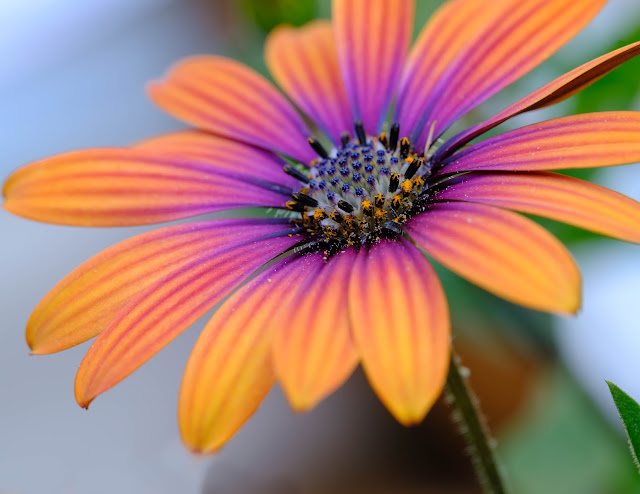
Our garden burst with color this year. I'm puzzled because our winter has been so dry. One big rainstorm in December and little else since. The garden seems to have ignored the lack of water and is celebrating with the rest of us the return of Spring, renewed life, and glorious weather. In the Northern Hemisphere, color is everywhere.

photo by Bill Slavin

As I walked by the dining table, I saw Bill's basket of pillboxes all in pastel colors. I felt the memory return of a basket of softly colored Easter eggs and the fun of dyeing them for the holiday.

My sister Linda and I dyed eggs the day before Easter. My mom would hard cook a dozen and set them to cool. While we waited for the eggs, Linda and I emptied the pellets from the PAAS egg dyeing kit into separate glass bowls filled with vinegar and watched the chemical reaction as the tablets dissolved. We sat around our dinette table with its metal tube legs and a yellow top that was imperious to anything we splashed on it. We drew on the eggs with white crayons to create hidden designs that would only appear when we dipped the eggs into the dye. We rolled the eggs over and over again in the dye to make the colors intense. Sometimes we dyed only a part of the egg in one color, then dipped the egg into another color to create different hues. Ours were not the perfect creations done by Ukrainian pysanky artists, but we kept busy trying to make our best ones.

On Easter Sunday, we woke up to search the house for the eggs that the Easter Bunny had hidden. The Easter Bunny, rooted in old pagan stories, the festival of Eostre, and celebrations of fertility, has connected with the traditions of Christianity because of the Spring season of rebirth. Eventually, my sister and I became the hiders of the eggs for our older sister's children. Our mom would make deviled eggs from the discovered dyed eggs to serve at our holiday dinner.


Deviled eggs, a favorite of Craft Day participants, made by Terri Waterman

Many other cultures celebrate Spring, often with bright colors. People in India fling intensely colored powders at each other to celebrate the Hindu Holi Festival. What fun to abandon all reserve to cover each other in colored powder, especially this year.

In April in Thailand, the Songkran Water Festival takes place, without colorful props, to celebrate their new year. People use spray guns, hoses, and buckets to dunk others with water. With temperatures close to 100 degrees in April, the water comes as a welcome relief.

Nowruz in Iran celebrates new life (No=New, Rouz=Day) with a thorough house cleaning. Donning brightly colored clothes, celebrants set bonfires and gather for family get-togethers.

The Spring Equinox is celebrated in Mexico with thousands of people dressed in white who scale the Teotihuacan Pyramid to soak in its energy for the year.

With two years of pandemic life behind us, we seem to be celebrating this year's festivals and traditions with more intensity and more color. Even our gardens are celebrating!


photo by Bill Slavin


Are you like me concerned about the number of books being banned in community libraries across our country? Write a letter to your representatives. Here's a link to help:

<link href='https://actionnetwork.org/css/style-embed-v3.css' rel='stylesheet' type='text/css' /><script src='https://actionnetwork.org/widgets/v4/letter/tell-congress-enough-with-book-banning-bs?format=js&source=widget&referrer=[object Object]'></script><div id='can-letter-area-tell-congress-enough-with-book-banning-bs' style='width: 100%'><!-- this div is the target for our HTML insertion --></div>

Friday, April 8, 2022

READING MAKES A WELL-ROUNDED PERSON

I'm still working on this idea


Do you remember the first time you went to a library and checked out a book? I have heard so many good stories from others about how a library became an important part of growing up. We owe the public library system to Benjamin Franklin and his friends who started a lending library available to anyone in their town.

Did you watch Ken Burns' film on PBS about Ben Franklin this week? You can still catch it and remind yourself how Franklin, a man of many talents and interests, foibles and transgressions, helped mold the idea of the United States.

Franklin was a self-taught scientist and inventor. His invention of the lightning rod grew out of his experiments with electricity. His discovery prevented many tall buildings from catching fire due to lightning strikes. He never took payments for any of his many inventions. He felt that they should be available to anyone to use. He was a supporter of the smallpox vaccine after his second son died from the disease.

Franklin was a printer, writer, and voracious reader. He is known for his newspaper and the yearly Poor Richard's Almanac, which provided information about weather, times to plant, and sayings, such as, "Never leave till tomorrow that which you can do today," that people incorporated into their daily lives. He helped to develop our national postal system, which brought the disparate colonies together and which helped him to understand the need for the colonies to be united into one entity.


I'm still working on this broadside about Franklin


Franklin was also a womanizer and left his family in Pennsylvania for years while he lived in London. He was deeply prejudiced. His ideas about equality did not include women, people of color, or indigenous people, and he was a slave owner. To better understand his earliest beliefs read his Observations Concerning the Increase of Mankind, Peopling of Countries (1751). Later in life though, he changed his thinking about slavery and the abilities of black people after observing the children in schools run for black children. He eventually became President of the Abolitionist Society and petitioned Congress to provide the means for slavery to end.

In other words, Franklin was a complex man who managed to rise above his own early beliefs to help construct a country united around equality and freedom. Learning or re-learning about people like Franklin shows how important it is to know history. Without that perspective, we could easily slip into a different type of governance. We are still trying to live up to the ideals that our country was built upon.

We are lucky to be able to read about his life in The Autobiography of Benjamin Franklin.

This is National Library Week. Celebrate your library!

Other good reads, not about Benjamin Franklin:


More information about Benjamin Franklin here:

https://www.pbs.org/kenburns/benjamin-franklin/

http://www.benjamin-franklin-history.org/slavery-abolition-society/

Friday, April 1, 2022

TIME FOR BEAUTY

3 examples of European folk art (artists unknown): 1. Austria  2. Germany 3. Poland


Few of us knew how important Ukraine would become to all of us. Because of the war, we now know more about a country rich in tradition and culture, a country the size of Texas, and a country that exports its grain, lithium, coal, steel, and petroleum products. Ukraine also exports its arts. Ukraine's folk art, similar to folk art in other European countries and in Russia, fills the surfaces of pottery, embroidery, woodcarvings, and decorative painting on furniture and houses with flat, repeating patterns, geometric shapes, animals, flowers, and people. They are rich in color and design.

Painting by Maria Prymachenko (courtesy of Colossal)


When you bomb a city, you also bomb the heritage of a place. Looking at photos from last year of Ukrainian cities, we see grand buildings reminiscent of Paris, Prague, and Budapest, which all somehow escaped the bombings in World War I and II. Now we feel outraged at the sight of the demolished buildings in city after city. Already a museum in Ivankiv that housed the work of Maria Prymachenko (her work above) and others has been destroyed. Prymachenko often drew references from her embroidery but included strange beasts and mythical figures. Picasso and Chagall admired her work.

Other Ukrainian artists of this century have incorporated folk traditions in their own more experimental work. Olesya Hudyma fills every inch of space in her fantasy paintings and makes reference to religious figures in her Madonna series.

painting by Olesya Hudyma  (courtesy of stringfixer)


Ukraine is known for its painted egg decorating, called pysanky.  Each area in Ukraine produces different eggs designs. The artist Oksana Mas has turned a small craft into large works of art, using wooden painted eggs as the foundation for large sculptural pieces, including monumental works displayed at the 2011 Venice Biennale. The eggs, a symbol of life in many cultures, are painted by volunteers who work with Mas to create her installations. Some of her pieces, including the 2011 piece, have been disassembled so that the eggs can be sold individually.


Spheres of Good and Spiritual Renaissance by Oksana Mas

Of course, the lives lost in this war are the most devastating consequence of the bombings, but the loss of cultural memories will have an impact on all of us as well.


Read more about these wonderful Ukrainian artists here:


Olesya Hudyma's artwork can be viewed here:

Read about the monumental work created by Oksana Mas in 2011 for Venice Biennale:


Check out Etsy for artwork to purchase by Ukrainian artists:


Friday, March 25, 2022

PROMPTS

Photo by Bill Slavin

 Who inspires you? 

A prompt from my writers' group made me think of Dorothea Dix, Jane Addams, both early social workers, and Mary Poppins. Real and imaginary people. Today, Barbara Lane, a San Francisco Chronicle columnist, reminded me about Brenda Starr, Ace Reporter, the main character in a comic strip, who had her own career and traversed the world for a story. Barbara Lane wrote that reading the Brenda Starr stories inspired her to become a journalist. Brenda Starr was one of a few main female characters in a time when someone like Barry Goldwater could say, "I have nothing against a woman doing anything a man can do as long as she gets home in time to cook dinner."

Prompts take me down different paths as I search for an idea for a post. As I listen to another tender story from one of the writers in the writers' group, I think how the message of her connection to the restful and soothing effects of water resonates with so many of us. Other people feel the same kinship with mountains or they find solace in their gardens. In each case, the connection is to the natural world. There are always exceptions to what provides well-being. A friend who grew up in Tokyo feels uncomfortable in parks or out in the woods. She found her place in the hustle and bustle of the concrete city instead. Where do you find inspiration and solace?


Photo by Bill Slavin


In the weeks that our group meets, many themes tumble out onto the page. One woman chronicles her life at 19 in a big city, another writes of her birthplace and how the land raised her. Another records stories of the struggles of being an outsider/refugee with a close family for support. Each of these themes prompts me to think of events in my own life that could be a post. You don't have to be a writer to think about any of the following prompts:

What book from your childhood had an impact on you?

What is a favorite magical spot?

What do you carry with you?

What did you want to be when you grew up? Did you end up doing it? If not, what happened? If so, was it what you expected?

I hope these prompts will open up memories that give you insight into yourself.  If writing works for you, write down your thoughts. Make a list. Record your thoughts on tape. If you draw or paint, use these prompts or find inspiration in Bill's photos to begin a page about your life.


Photo by Bill Slavin


Friday, March 18, 2022

COLORS OF SPRING TWO


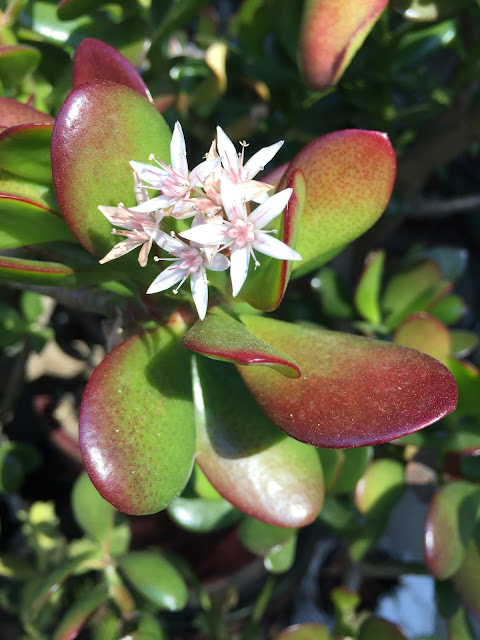
Color mixing challenges me no matter what medium I try. While working on my self-imposed 30-day challenge of the Colors of Spring, I spent time looking at the colors in the flowers and tried to duplicate them. I realized that Nature is a master colorist. I was flummoxed when I discovered several plants that have red and green blended together. Mixing these two colors on the opposite end of the color wheel with paint or colored pencils usually gives me shades of brown. The real plants I looked at, such as the succulent Crassula, managed to be vibrant instead of dull.


I set up some obstacles for myself when I started. I planned to paint with watercolors for this daily practice. I chose cold press paper, which is my usual watercolor choice. When I discovered I didn't have the bright spring paint colors in my palette, I switched to colored pencils without starting with smoother paper. I also drew the outlines of the flowers in graphite pencil. This lack of planning and wrong choices reminds me of cooking preparation. If you watch cooking shows, the cooks always have each ingredient measured out, lined up in order of use. Preparation makes a difference, doesn't it? Luckily for me, this challenge is a practice, not a finished product, and a way to learn from my mistakes.


I finished my 30-day challenge by day 15. These challenges motivate me to do some artwork every day. Once I start though, I find it hard to stop each day with just one square. I find that I also wander off in other directions: looking up names of flowers, making a color wheel, and refreshing/learning information about using colored pencils. I'm not a master of these tools. I've used them all my life, but, like watercolor, I haven't concentrated on them enough to be an expert colored pencil artist. One of the rabbit holes that I went down this week presented me with colored pencil artists' websites. As always when I find a new artist I like, my mouth drops open at their abilities and creativity.

Take a look at some spectacular examples of colored pencil art:

Ann Kullberg:

https://annkullberg.com/pages/ann-kullbergs-art-gallery

Arlene Steinberg:

http://www.arlenesteinberg.com/ArlenesDrawingsNew.htm

Cindy Valek Mottl:

https://www.cindyvalekmottlart.com/works


************


Brooklyn Art Library, the home of the largest collection of art sketchbooks, had a disastrous fire. They were in the process of moving the collection to a new home when the truck carrying the collection was in an accident. They are now attempting to save as many sketchbooks as possible. They have a GoFundMe page:

https://gofund.me/75a44938

You can see the digitized collection (including 2 of mine) and more news of the fire rescue at their website:

https://brooklynartlibrary.org


One of two sketchbooks that I sent to the Brooklyn Art Library in January.
It has not been digitized yet and may be lost.

*********


St. Cloud State University, my dad's alma mater, is hosting us for a reception at the university archives which now contains much of his work for 30 years drawing the Bugs Bunny comic strip. After the reception, the drawings will be available for viewing by appointment.


Friday, March 11, 2022

COLORS OF SPRING


Winter and Spring dance around each other

Bleak, grey clouds wrap up the sun

Burst of flowers flood the world with colors

Swirling rain and snow squabble over fingers and toes

Spring sun catches your spirit and flowers open with joy

There is no Spring without Winter

Does Winter need Spring?


Here in the Bay Area in Northern California, we are in the middle of Spring already. The daffodils are gone, camellias edged with brown hang their droopy heads, and Spring green leaves have unfurled. Other flowers, primroses, pansies, rosemary, fuchsias, and deer's ears, push their way into view. I want to capture what I see. All this activity is a good reason for me to do another 30-day challenge.

I pick a piece of cold press watercolor paper, which has a roughness that catches the paint and I draw a 2" square grid across the paper. In each square, I pencil in one of the flowers I see in our yard. I set out to paint them and discover I could not capture the intense Spring colors of the flowers. I needed Opera, a bright pink and a blue that wasn't Cerulean, Cobalt or Aquamarine. My palette didn't contain anything close. I turned instead to colored pencils.

Usually, when I use colored pencils, I draw on hot press paper, which is as smooth as copy paper and allows me to color in a flat wash with no paper showing through. I also normally use a blue pencil to draw the outline of the image. A regular pencil's outlines will show through the colored pencil giving me hard edges all around the object. I could have started over, but this was supposed to be fun, a way for me to make a daily quiet practice. I forged ahead with what I had. A couple of good tips about using colored pencils: shade the area by drawing overlapping circles to avoid seeing pencil lines and layer colors one on top of the other to give a more luminous view.


Love sunflowers? They mean more today than ever. Check out the sunflowers posted by artists all over the world here:

https://www.artistsnetwork.com/art-inspiration/sunflowers-for-ukraine-artists-solidarity/?utm_campaign=Artists%20Network%20-%20Newsletter&utm_medium=email&utm_content=206175726&utm_source=hs_email