Friday, October 2, 2020

THE INSPIRATION FOR A CHILDREN'S STORY


A kind friend gave me a balloon for my birthday at the beginning of September. The balloon, a helium-filled one, has lasted much longer than most. The balloon started out tied to a chair across from me at our breakfast table. I looked at it each morning and it made me smile. About a week ago, the balloon started dipping down, so I untied it to let it drift. 


It lingering in the dining room for a day, and then to our surprise, began to wander around the house. We would get up in the morning to find it waiting patiently for us in the kitchen or hallway or at the bottom of the stairs. Today, September 30, was its last day, I think, as the bottom of the balloon touched the floor with the string circling around it.


Wouldn't this quiet balloon's movements make a good children's story? One about resilence, steadfastness, or loneliness? Many themes such as these appear in children's tales giving readers a sense of what they need to carry them through the big problems that they encounter through life. 

The best children's stories often use simple objects such as the broom in The Sorcerer's Apprentice or Lily's plastic purse from the book by the same name by Kevin Henkes to create meaningful characters. Can you think of an object or an animal that could represent qualities you would want to pass down to the next generation? If so, you have the makings of a children's story.


Do You Know Cats? by Martha Slavin

I taught a class called Quest to junior high school students. The class helped students understand how their words and actions could affect others. I used one exercise called the Bucket Tale, which was similar to a children's story. Each time the main character did something that harmed, ridiculed, or demeaned someone else, one of the students dropped a small stone into the bucket. The clang rang throughout the classroom as the bucket filled up quickly. The students got the point just as quickly. Carol McCloud turned this story around and wrote a book about kindness called Have You Filled Your Bucket Today? Another book, David Gets in Trouble by David Shannon, gives us examples of the importance of honesty. How our actions affect others can be found in What If Everyone Did That? by Ellen Javernick. Maybe, this year, we all need to go back to reading children's books to remind outselves of what we value most.


*****************


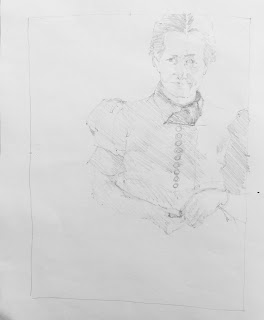
I finished a 30-day painting challenge. I selected some of the drawings and made a mosaic of them:


You can find more children's books here:

Good Reads for Children 

PikMonkey is one of many websites that help to create photo mosaics. They offer a 7-day free trial.

Photo Mosaic site

Friday, September 25, 2020

INSTEAD OF STATUES


Oakland Mural by Gaia WXYZ
photo courtesy of Pete Rosos

How easily we get stubborn about so many issues these days. I won't get into a fight about the removal of statues, but I want to offer a suggestion. We need let go of our hackles and think like artists. We need to discover better solutions. We need to stop putting up statues of real people. 

Instead, like the Statue of Liberty or Rodin's Thinker, we can create monuments to ideas. Mildred Howard, a present-day sculptor originally from the Bay Area, uses ideas to create thought-provoking installations. Her house called You Are Welcome Here is made from recycled glass and wood and reminds a viewer of both slave quarters and the modernistic homes built by Bay Area architect Joseph Eichler, who was one of the first builders not to discriminate against anyone for their ethnicity, religion, or class.


You Are Welcome Here by Mildred Howard
courtesy of Parrasch Heijnen Gallery, Los Angeles


I don't know anyone who has walked by the Vietnam War Memorial in Washington, D.C., who hasn't been moved by the experience. The sculpture by Maya Lin was first controversial because it wasn't traditional and didn't show human figures. Instead it lists all the American men and women killed in the war. The addition of a set of three soldiers of different ethnicities salved some of the criticism. The soldiers are placed so they look back at the list of names. Another effective placement. A statue honoring women who served was added in 1993.

A list of names is a powerful message. I first saw such a list when I visited Alnwick, a small town in the north of England. In their community hall, carved into a long brass plate running from the two-story ceiling to the floor, was a list of the men and women from this small town  killed in action in World War I. The names towered over me. I've seen similar lists in a synagogue in Prague, and now the University of Virginia, has erected a memorial to enslaved laborers, designed by Howeler+Yoon, after gathering feedback from community forums. It too is a list of names placed in a park-like setting.

Walking by and among these names makes you pause and reflect on the results of wars and/or deep human experiences. Have you ever had the same reaction when you walked by a man on a horse?


Check out the work of Mildred Howard and watch the video, Welcome to the Neighborhood, Where do you go when you can no longer afford to live in the Bay Area?

Mildred Howard

Mildred Howard current exhibition

Monuments worth visiting:

National Memorial for Peace and Justice

Vietnam War Memorial, Washington, DC

Memorial to Enslaved Laborers, UVa

************

Last batch of postcards encouraging people to vote going out today!


New batch of Soul Box Project boxes going to Soul Box Project in Portland, OR


Friday, September 18, 2020

LITTLE FORESTS AND SMALL PAINTINGS


We're halfway through September. The redness in the sky has dissipated, though the air quality here is not good. Climate change creates accelerated fire conditions that pine beetles, the three-year drought, and poor forest management feast on. It's not going to get cooler.

We are doubly sequestered now: coronavirus and fires. I look for more things to do in small ways inside the house. I'm both an artist and a gardener. I've tried growing plants in my kitchen. I've signed up for a 30-day art challenge and decided to paint objects in my workroom.


With the smoke, we haven't seen shadows for days. Hoping for a sunny spot, I've been growing small bits of greenery in baking cups. I felt a small joy to see a shadow near a window.


The ends of carrots, onions, and celery can be placed in water, which is a fun scientific experiment. And a good way to include a few fresh greens in our food. Left in the water, the ends will sprout to look like miniature forests. The celery comes up like tiny celery stalks. I've tried planting the results in soil, but so far I've had no success in turning these beginnings into regular plants. I keep trying. The greens make excellent additions to salads or on potatoes or eggs. Besides, watching them grow gives me one more thing to do.


Each month this year brought new challenges. In the first few weeks of sheltering, we seemed to have an endless amount of time. We took slow walks, we read mountains of books and newspapers, we chatted on Zoom, and watched movies we'd never heard of, but now our days are filled. We wonder where the time went, but we keep adding more things to our calendars. Some of the things that I had on a perpetual list of things to do I realized that I will never get done. They were a flickering interest that disappeared once I had added them to my list. 

What new things are you doing now?


Some of my daily paintings for the 30-day Challenge:


Friday, September 11, 2020

EIGHT LESSONS


What I've learned from watercolor classes:

A good drawing makes all the difference.
Remember hard and soft edges
Paint shapes, not objects
Stop when you think you are 90% done
Lay a light wash of Permanent Yellow Deep except where you want the white paper to show through
Hold your brush so that the bristles face vertically down to paint
Stop when you are 90% done
Tell yourself: this is just practice

I'm not taking my watercolor class this summer session so I'm trying to paint a watercolor each week. Sometimes I paint a lot in one day, sometimes just a little. I have tried to slow myself down so that I only paint while I feel confident. As soon as I start to feel squirrelly and unsure, I stop and take a breather.

My watercolors are not exhibition-worthy yet, but they are instructive for me and maybe for you. What I've learned about watercolor: a good drawing makes all the difference. If the drawing is out of proportion or off in any other way, the painting will be too. And there is little that can be done to correct that once I start painting. Might as well start over with a better drawing.

The photo of a woman from the 1930s (an old girlfriend of my dad's) intrigued me because of the high contrast. My drawing didn't show its errors until I started painting. I drew her head a little too big for the rest of her body, which only showed once I started painting below her head.


Once I've done my drawing, I dampen the paper and brush a light wash of yellow. I left the white highlights on her face and arm. The wash gives the paper and subsequent washes a glow that wouldn't be there from just the white paper itself.


Learning to draw for painting means learning to leave a lighter line where soft edges will be. If I don't paint soft edges, then the painting looks flat. In this painting, soft edges can be seen in the folds of her dress, and the bottom of her arms. They can be achieved by blurring the line between one color and another or having the same value next to each other so that the two shapes blend together.


I discovered that painting with my brush held vertically with the tip towards the bottom of the paper to be an effective way to add color either in large washes or in places where I could get too concerned with detail. I have been surprised by how well it works.

Every time I start a painting, I tell myself that this is just practice. It's a way for me to relax and not to care too much. Now I'm trying to tell myself to stop when I think I'm 90% finished. It's that last 10% where I can ruin a painting by overworking an area. Than that painting goes into my pile to be cut up and used as part of my mixed media stash.


This one is just practice!


**********

My mixed media piece, There Is Always More, can be viewed online for the annual The Second Half show at the Las Laguna Gallery in La Laguna Beach, California. The exhibit is online only and has a bountiful group of work to view.


https://www.laslagunagallery.com/current


Friday, September 4, 2020

FOLLOWING TRACKS


On my daily walk this summer, I watched as workers spread slurry over the street. They left a road that was pristine black and smooth as a new chalkboard. The next day, I noticed impatient tire tracks coming out of driveways, carving out the slurry before it was completely dried.


In the next couple of days, animals came down from the dewy grasses on the hills to walk across the street and left muddy prints of their passing. The deer hooves I recognized. And the small dog prints. I followed the track of an animal as it meandered from one side of the road to the other, up a hilly space and across another section of road. The tracks could have been a dog off-leash, but it also could have been a coyote, whose howls we hear regularly. I took photos and compared the two types of prints online. I couldn't distinguish the two. I needed a more experienced tracker than I am. 
A mystery unsolved.


Each day as I walked, new trails crossed the road. First, the road itself began to crack in places as the earth shifted under it. Mountain bike tires, possibly a rabbit, one foot of a squirrel perhaps, and of course, humans left their marks.


On one cross street where the crows congregate every day, white splashes of poop dotted the pavement.


During the lightning storms a couple of weeks ago, the trees let go of many of their dry leaves, crowding the gutters and spilling into the roadway. In a few short weeks, the pristine black pavement started to disappear into patterns and textures, absorbing the life that ventured upon it and telling a mysterious story.


Friday, August 28, 2020

ART IS HALF PERSISTENCE


Roger Peterson by Martha Slavin


A friend, taking an online watercolor class, remarked, "I'm just copying," not giving herself credit for the considerable progress she has made.  Her statement reminded me of our time living in Paris when our son was in middle school. He took drawing lessons from Marc Vinciguerra, a young artist, who sat in our apartment strumming Theo's guitar before taking Theo to the local museums to draw what he saw on the walls. Theo followed a time-honored tradition of copying a master's work, a practice that most artists do to learn techniques.

Both my parents went to art schools. They, like my sister and I, spent college years in large art rooms filled with students behind drawing boards or easels with a model at the center of the room. We spent hours studying the form, learning about the bones and muscles underneath the skin, and how to draw a figure in 3-dimensions.  My dad also took classes through the mail from the Federal Schools based in Minneapolis.


A sculptured face by Ralph Heimdahl


by Esther B. Heimdahl


I am still copying, especially when it comes to watercolors. I like painting flowers and portraits more than landscapes. I look for artists whose style interests me.


by Martha Slavin

Uncle Buvver by Martha Slavin


I visited Chuck Bukovnik's studio and feasted my eyes on his work. He paints flowers, filling a full sheet of watercolor paper with glorious examples. Ever since that day, I have been trying to get him out of my head. I think painting is sometimes like listening to music. When you hear a song you like, the song gets embedded in your brain and it is hard to get out. The same with painting. If I like a technique and try it, sometimes it is hard to change it to fit my own way of working.


Chuck Bukovnik's watercolor palette


I look at other artists, such as my cousin, Hugh Heimdahl, who freely paints portraits just with dabs of paint. He manages to capture the character of the person so well. 


by Hugh Heimdahl


by Hugh Heimdahl


I continue to look for inspiration from other artists. I am still learning.


More about the Soul Box Project:

We've sent several new sets to Soul Box Project. Mary has honored women killed by gun violence. My boxes name young men under 25 who have died from gunshots. Pam's boxes honored members of families: mom, dad, sister, and brother.


by Pam


by Mary


If you would like to contribute a box to honor someone who died from gun violence, go to:


https://soulboxproject.org/home


Chuck Bukovnik doesn't have a website, but you can see his flower images here:
https://www.google.com/search?safe=active&rls=en&source=univ&tbm=isch&q=chuck+bukovnik&client=safari&sa=X&ved=2ahUKEwi_jbHE6bzrAhUjHzQIHQTJBf0Q7Al6BAgKEBk&biw=1261&bih=1329

Friday, August 21, 2020

CATS, BOATS AND CLASSROOMS


Stone Lagoon Classroom by Charlene Gerrish
  Third Place award-winner at The Women in Watercolor competition


Watercolor is hard. Like so many endeavors, watercolor takes lots of practice. You could be inspired by these two artists, Charlene Gerrish and Ruth Collins. They are both people who have practiced art all their lives. Their work is something to aspire to. They have very different styles, which represent the opposite ends of watercolor: the meticulous, but atmospheric, layering of paint to create a scene as Charlene does in "Stone Lagoon Classroom" or the free-flowing movement of washes of "Alice and Harold" by Ruth Collins. Both are equally valid ways to work in watercolor. Neither is easy! Most art, just like any skill, takes practice and copying to learn techniques, and plenty of time to observe the subject matter. 


Alice and Harold by Ruth Collins


Every watercolor instructor that I've met sets up their palette differently. Some label each section with the name of the paints and mix puddles of paint liberally on the palette, not necessarily cleaning up before mixing anew.


  Others contain their paints in a small, portable palette and clean their palette mixing spaces after each use. There is room for both ways of painting.


Watercolor is also good for sketching when you are outside and want to keep a memory of a place you've visited. I made a book of my sketches from a time I spent in Carmel and then combined them all into a handmade book.


Carmel by Martha Slavin


There are many great online courses to teach you watercolor techniques. Check out these websites. If you found another good instructor, let me know!


Everything-Art
Cindy Briggs, watercolor
Andrea Chebeleu at a Work of Heart Studio
Shari Blaukopf


Check out Charlene Gerrish's work here:


Are you registered to vote?  Now is the time to check your registration.
For impartial information about voting and issues that concern you, 
go to the League of Women Voters, Vote411: